
Is cheerleading a sport?
Short answer, yes. Competitive cheerleading meets widely accepted definitions of a sport, because athletes train and perform physically demanding skills, follow a codified rulebook and scoring system, and compete head to head at events with judges and clear outcomes. The longer answer adds helpful nuance, especially the difference between competitive cheer and sideline cheer, the levels involved, injury risk and how to get started in the UK.
Sport criteria and how competitive cheer meets them
Most definitions of sport centre on physical exertion, skill, competition and rules. Competitive cheer ticks every box: it demands tumbling, lifts, tosses, jumps and synchronised dance; it requires technical mastery built through structured training and progression; it uses clear rules and scoring with judges evaluating difficulty and execution; it runs organised competitions at regional, national and international levels; and it depends on team strategy, role specialisation and timed routines performed under pressure.
That combination places competitive cheer alongside other judged acrobatic sports such as gymnastics and figure skating. The routines are short and intense, the margin for error is small, and success relies on strength, timing and teamwork.
Competitive cheer versus sideline cheer
The word cheerleading covers different activities. Understanding the difference helps answer debates about sport status.
Competitive cheer, often called All Star cheer, exists to compete. Teams train year round, learn a choreographed routine of stunts, pyramids, tumbling, jumps and dance, then perform it on a sprung floor for judges. Scores reflect difficulty and execution across defined categories, and the highest score wins.
Sideline cheer focuses on supporting another sport, such as football or basketball. Squads lead chants, perform short dances and create crowd energy. It can be athletic, but the goal is spirit rather than competition.
When people ask whether cheerleading is a sport, they are usually thinking of competitive cheer. That is the version with divisions, levels, rulebooks and results, which is why it is recognised as a sport by many bodies worldwide.
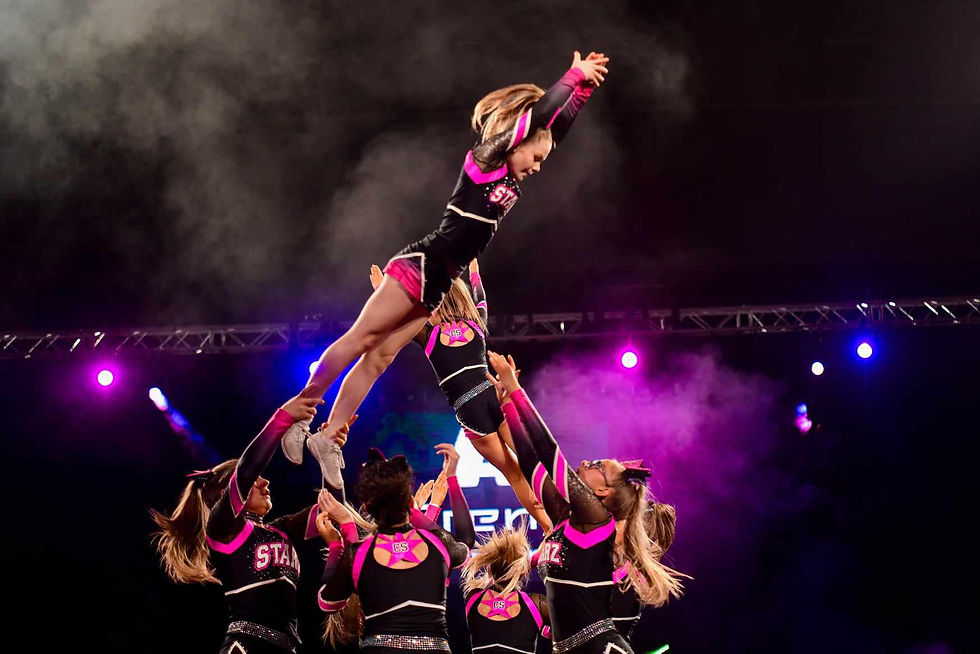
The athletic demands behind a two and a half minute routine
A standard competitive cheer routine lasts around two and a half minutes. Within that time, athletes must deliver a packed sequence of skills at speed while staying perfectly synchronised.
Tumbling, from cartwheels and round offs to handsprings and twisting somersaults, needs power, flexibility and precise technique. Stunting and pyramids require whole body strength, coordination and trust, with bases driving and stabilising, back spots controlling rotation and safety, and flyers holding their shape in the air. Jumps demand mobility and explosive power through the hips and legs, linked to sharp arm placement. Dance and transitions connect the routine, testing stamina, timing and performance quality.
Training covers strength and conditioning, technical drills, flexibility, landing mechanics and repetition with careful spotting. Teams also rehearse role specific timing and voice projection so counts remain clear under pressure. It is not only physically hard, it is mentally demanding too.
Divisions, levels and how competitions are scored
Competitive cheer is organised so athletes can perform safely and fairly against teams of a similar age and skill level.
Age divisions group teams broadly by athlete age.
Levels, commonly numbered from Level 1 up to more advanced tiers, cap the difficulty of tumbling and stunting skills permitted in a routine.
Score sheets break routines into categories such as stunts, pyramids, tumbling, jumps, dance, building skills and overall performance, each with execution and difficulty components.
Deductions apply for falls, out of level skills, time violations and safety infractions.
This structure lets beginners compete with appropriate skills while advanced teams push difficulty within safe rules. Events range from local and regional meets to national championships and major international stages.
Cheerleading carries risk, so safety comes first
Competitive cheer involves lifts, throws and tumbling, so there is real injury risk, as in gymnastics and contact team sports. Typical injuries include sprains, strains, impact injuries, concussions and the occasional fracture. Risk is not a reason to avoid cheer, it is a reason to train and supervise well.
Effective programmes reduce risk through:
Qualified coaching, clear progressions and strict skill sign off
Proper equipment, including sprung floors and appropriate mats
Spotting, safe catching technique and team communication on every rep
Conditioning for shoulders, core, hips and ankles to protect joints
Rules that limit difficulty by level, plus competition safety checks
With the right culture, safety sits alongside performance. Athletes should be encouraged to speak up about discomfort, take recovery seriously and build skills step by step.
How hard cheer is compared with other sports
No single sport can fairly claim the absolute hardest label for everyone. Difficulty depends on the skills required, the athlete’s background and how progress is measured. Cheer sits near the top for multi skill complexity, because it blends acrobatics, strength, flexibility, power, endurance and precise teamwork under strict time pressure.
A flyer needs balance, core strength and body control in the air. A base needs leg drive, shoulder strength and perfect timing to stabilise a stunt while protecting the flyer. Tumblers must sprint, punch and land with centimetre precision. Then the whole team must link those skills in sequence, keep counts and perform confidently. That combination is rare, which is why high level cheer demands so much training and commitment.

Cheerleading and the Olympics, current status
Cheerleading is not currently on the Olympic Games programme. However, the International Olympic Committee has granted recognition to the sport’s international federation, which acknowledges cheer as an organised competitive activity with global governance.
Olympic recognition of a federation is not the same as adding a sport to a Games, but it does provide a pathway. For now, the pinnacle of cheer competition includes major international championships run by recognised bodies, alongside national events in many countries, including the UK.
Why official recognition matters beyond medals
Recognition matters because it supports athlete welfare and development. When a sport is formally organised, it benefits from clear safety standards and coaching qualifications, structured pathways for beginners through to advanced teams, consistent rules and fair competition frameworks, better access to facilities, funding opportunities and insurance, and visibility for inclusive formats such as ParaCheer.
ParaCheer integrates disabled and non disabled athletes within the same team, proving cheer’s adaptability and its focus on teamwork, communication and shared success. That inclusivity strengthens the case for cheer as a modern sport with space for everyone.
Becoming a cheerleader, difficulty and entry routes
Getting started is very achievable. You do not need gymnastics experience to join a beginner or recreational class, and adult beginners are welcome at many clubs. What you need most is consistency. If you are an adult thinking of starting, explore our friendly adult cheer classes to learn skills in a supportive environment: adult cheerleading classes for beginners and returners.
Here is how progression usually works in practice. You begin with fundamentals: basic jumps, body positions, safe landings and partner drills that build a foundation. As confidence grows, you add tumbling and stunting, introducing handsprings, body control in the air, clean grips and clear counts. Next, you join a suitable team, either for recreational showcases or competitive goals that fit your confidence and schedule. Alongside technique, you build strength and mobility, because a little conditioning between sessions makes every skill feel steadier. As you go, you learn how competitions work, using score sheets and level rules to guide your training focus.
The step from first class to first competition varies by person. Some athletes prefer a recreational route and local performances. Others aim for novice or prep competitions, then work towards more advanced levels. If you hope to join a competitive team, be ready for regular training, trust based teamwork and patient skill progressions. To develop tumbling safely alongside cheer, our Middlesbrough gymnastics classes focus on fundamentals, strength and good landing habits that transfer directly into stunts and routines.

Common misconceptions and what cheer is not
Cheer is not just chants and pom poms. That stereotype belongs to sideline cheer, which focuses on crowd support. Competitive cheer demands the acrobatic power of a gymnast, the timing of a dancer and the spatial awareness of a team athlete who must protect other people in motion. It is judged with technical criteria, it is planned down to the second, and it rewards disciplined preparation.
Training time, commitment and recovery
The commitment depends on the pathway you choose. Recreational classes fit neatly around school or work, usually once a week. Competitive teams add more coached hours, home conditioning and occasional weekend events in season. People who progress fastest tend to prioritise attendance and communicate with coaches, take mobility and strength seriously, record small wins to build confidence, and support training with good sleep and consistent nutrition.
Recovery is a training skill. Good movement quality, cautious skill upgrades and honest conversations about fatigue protect long term progress.
The UK context, governance and pathways
In the UK, competitive cheer operates under national bodies and event providers that use standardised rules and scoresheets. That structure supports safe progressions from beginner teams to advanced divisions.
It also enables inclusive routes such as ParaCheer and adapted programmes for different ages and abilities, which makes cheer a strong option for families looking for a welcoming sport with clear development steps.
A place where every athlete can belong
If this guide has sparked interest, you can explore our inclusive cheerleading and tumbling programmes, recreational classes and pathways for different ages through our home page. Visit our website to learn about our training environment, approach and routes into teams: our inclusive cheerleading and tumbling programmes at Cheer Starz Academy.


Comments